



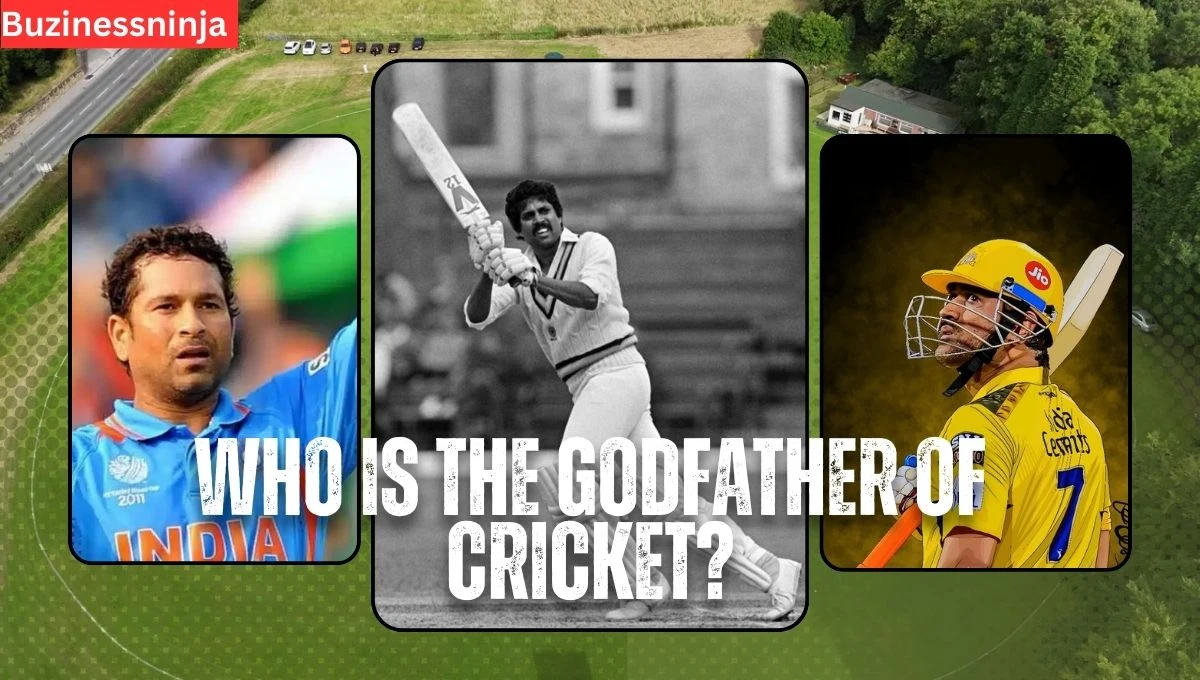
Cricket has always been more than just runs, wickets, and trophies. It’s a sage of passion, resilience, and about legends who left a mark on the game. It’s true that with time, cricket has woven itself in everyone’s heart. It claimed a corner that feels like a home. However, once in a while, every cricket fan comes across a term like “God of Cricket” for Sachin Tendulkar or “Father of Cricket” for W.G.Grace. Now, when it comes to “Godfather of Cricketer,” the debate goes on and the topic becomes more fascinating.
Sunil Gavaskar’s fearless batting. Kapil Dev’s historic 1983 triumph, and MS Dhoni’s calm leadership in modern cricket. These heroes earned the “Godfather” tag across eras. So, who really deserves the crown? Let’s deep dive into the stories of cricket’s greatest icon. Let’s uncover the true essence of this legendary title that has been a matter of question every time.
Origin Of The Term Godfather Of Cricket
The term “Godfather of Cricket” is not an official title that any specific personality has earned. But a symbolic honor given to individuals whose influence on the game has been extraordinary and influential. Much like a godfather in a family or community. They not only guided but also shaped and transformed the sport across generations and eras.
Historically, the title was linked with the pioneers like W.G. Grace. In the 19th century, Grace was the one who laid the foundation for modern cricket. But over time, people expanded the term. It began to include players, captains, and even visionaries behind the scenes. The one who revolutionized this sport. Whether through exceptional skill, leadership, or innovation.
Key Qualities Of A Godfather Of Cricket
The title goes to the one whose influence has shaped the minds of generations and who goes beyond stats. It’s not just about talent only. It’s about qualities like leadership, inspirational personality, and leaving a long lasting mark on the sport. Here’s the table below highlighting the key qualities. The personality that defines these legendary figures:
| Qualities | Description |
| Visionary Leadership | Guides the team with smart decisions. |
| Exceptional Skill | Excels in batting, bowling, or all-round play. |
| Consistency | Performs at a high level for years. |
| Innovation | Brings new strategies and ideas to the game. |
| Mentorship | Trains and inspires young players. |
| Cultural Impact | Inspires fans and shapes cricket culture. |
| Trailblazing Achievements | Breaks records and sets new benchmarks. |
| Resilience & Courage | Handles pressure and overcomes challenges. |
Global Figures Often Dubbed As Godfather Of Cricket
Let’s have a thought, cricket that we do see on our television screens has evolved through centuries. Pioneers, innovators, and modern conquerors shaped it. Each era has produced figures whose talent, leadership, or vision made them stand apart as the “Godfather Of Cricket”.
Some Of The Legends Listed Below Are:
Pioneers like W.G.Grace, SIR DON BRADMAN, and SIR RANJITSINGHJI were the ones who laid the foundation of the sport. Then came the transformers such as SIR GARFIELD SOBERS, SIR VIVIAN RICHARDS, KERRY PACKER, SUNIL GAVASKAR, and KAPIL DEV. These are the figures for redefining the game. They bought the fearless play and revolutionary changes.
The legends like SACHN TENDULKAR and MS DHONI carried the will of the hopes of billions. They actually engraved their names in cricketing folklore.
And finally, the conquerors like VIRAT KHOLI, ROHIT SHARMA, BEN STOKES, KANE WILLIAMSON, STEVE SMIOTH, BABAR AZAM, RASHID KHAM, and SHUBHAM GILL. These figures have dominated the modern era of cricket. They have taken the sport to unprecedented heights.
Godfather In Cricket By Era
Here is the table below that categorizes these figures by eras.
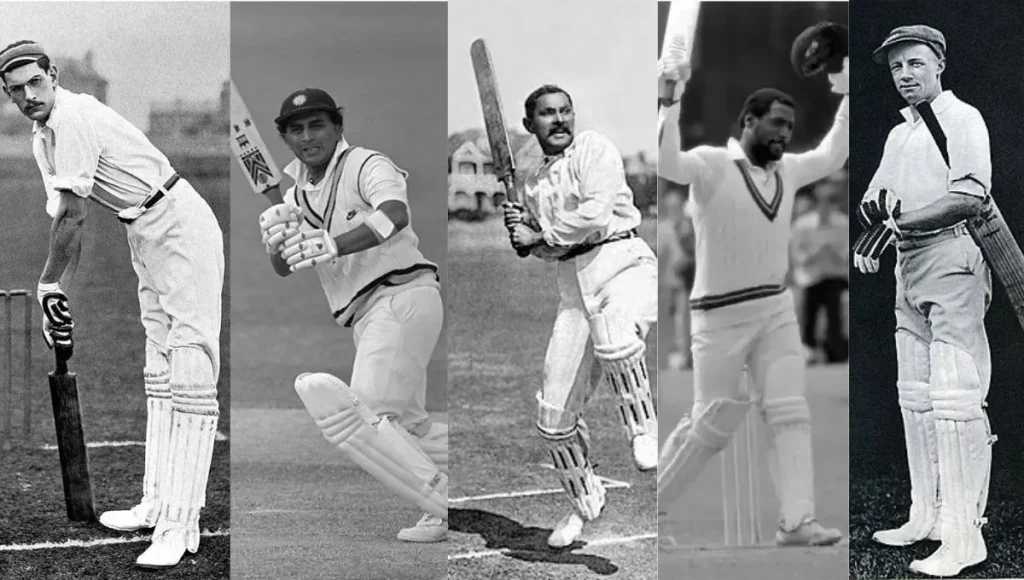
| Era | Player & Career Timeline | Country | Role / Influence | Career Highlights & Legacy |
| Old Era (1800s–1940s) | W. G. Grace(1865 – 1908) | England | All-rounder | He has scored 54,000+ first-class runs and taken 2,800 wickets. He revolutionized batting techniques and made cricket a professional sport. |
| Sir Don Bradman(1928-1948) | Australia | Batsman | He has a Test average of 99.94, 6,996 runs in 52 Tests. Known as a symbol of batting perfection during the Great Depression. | |
| Sir Vivian Richards(1974-1991) | West Indies | Batsman | He has a record of 8,540 Test runs, 6,721 ODI runs. He played with fearless aggression. Set the template for modern power-hitting. | |
| Sunil Gavaskar(1971-1987) | India | Batsman | He is the first batsman to reach 10,000 Test runs. His technique against fast bowling inspired a generation. | |
| Kapil Dev(1978-1994) | India | All-rounder | He has a record of scoring 5,248 Test runs and 434 wickets. He led India to its first World Cup win in 1983. | |
| Indian Golden Era (1989–2015) | Sachin Tendulkar(1989-2013) | India | Batsman | He has over 34,000 international runs, 100 centuries. Sachin is revered as the “God of Cricket.” He truly inspired billions across generations. |
| MS Dhoni(2004-2019) | India | Wicketkeeper-Batsman / Captain | Dhoni captained India to 2007 T20 WC, 2011 ODI WC, and 2013 Champions Trophy. He is known for calm leadership and finishing ability. | |
| New Era (2010s–Present) | Virat Kohli(2008-Present) | India | Batsman | Virat has over 25,000 runs across formats. He is known as the “Chase Master”. His unmatched consistency in modern cricket made him a legend. |
| Shubman Gill(2019-present) | India | Batsman (Next-Gen) | Gill comes in as a young prodigy with 200+ ODI scores and IPL Orange Cap winner (2023). He is seen as the future “Godfather” in Indian batting. |
Final Thoughts
The title of “Godfather of Cricket” is more than a records. It basically symbolizes the lasting influence, vision, and the ability to inspire generations. The title and the tag belongs to those who transform the game, lead switch distinction, and leave an enduring legacy. The legacy that shapes cricket’s evolution.
With every new era, the mantle passes on. It proves that greatness in cricket is defined not just by talent, by the mark one leaves on the sport and its followers.
Read More: