



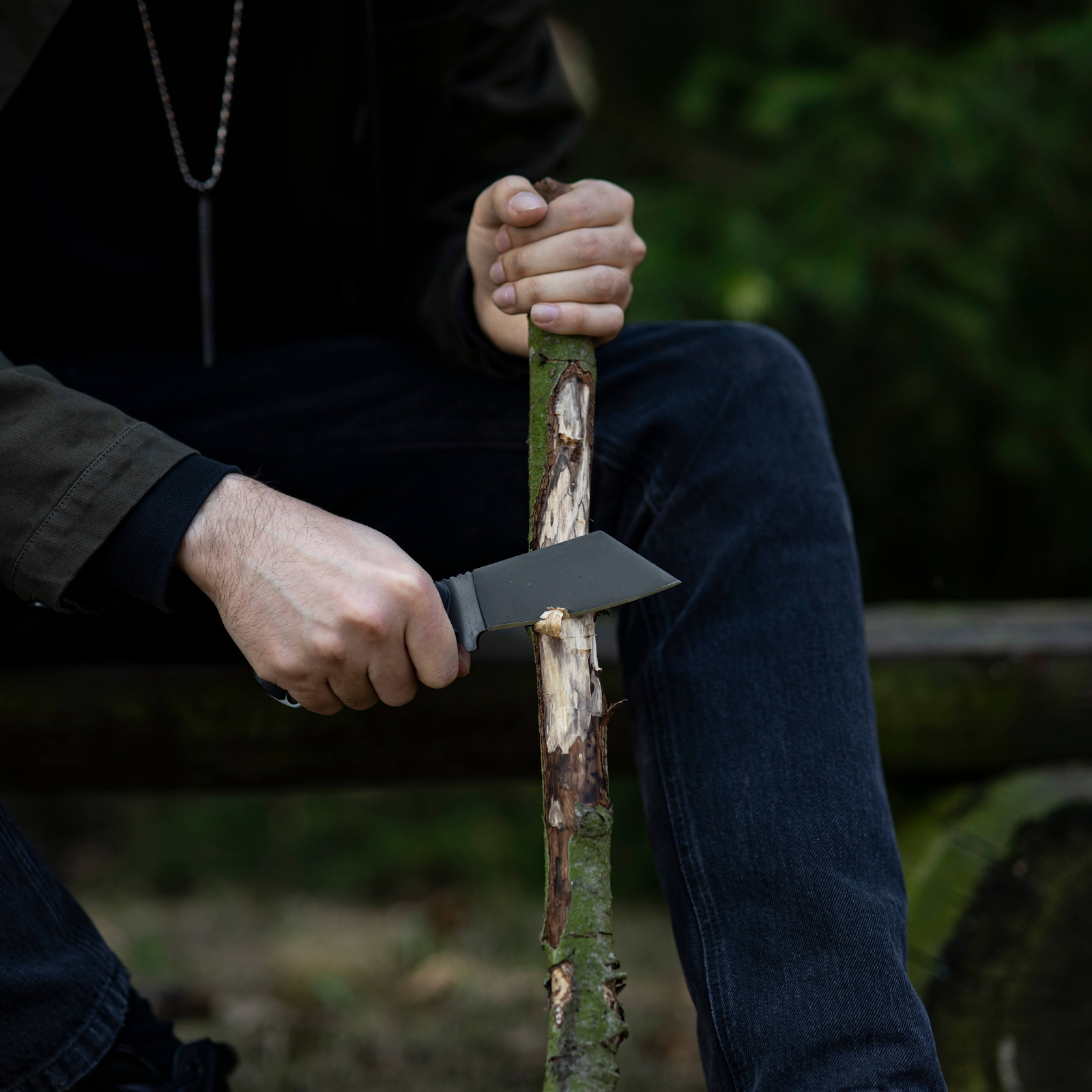
When the wilderness calls, a solid blade is as important as water and shelter. Mastering five fundamental knife techniques empowers you to be more capable in your shelter building, food procurement, and emergency handling. This article breaks down practical skills you can practice safely, plus guidance on gear so your knife becomes a dependable extension of your hand.
Grip and control: the foundation of everything
Mastery of holding the blade turns awkward motions into precise ones: from a firm hammer grip for heavy tasks to a reverse or pinch grip for fine work, keeping the wrist straight in line with the forearm reduces fatigue. Practice drawing the edge along controlled arcs without forcing cuts; steady pressure beats speed anytime accuracy counts. Safety routines include cutting away from your body and using a stable support, both of which reduce accidents. Regular sharpening preserves predictable edge behavior so your moves are identical whether you render tinder or process food. Building muscle memory through repeated practice helps these grips become instinctive.
Slicing and draw cuts: efficient material removal
Slicing uses the length of the blade to cleanly separate fibers; learn to angle the blade slightly and pull it toward you while letting natural weight do the work. For cordage or meat, shorter, repeated draw cuts conserve energy while producing consistent results. When working with bark or fibrous plants, first score with shallow passes, then deepen only as needed; such a course of action minimizes waste and prevents slips. Controlled slicing helps when preparing improvised bandages or trimming splints, where neat edges improve fit and comfort.
Whittling and carving: converting material to tools and tinder
Carving shapes functional items and creates feather sticks that ignite readily. Start with rough pulling cuts and then refine using sliced passes that remove thin layers; this progression keeps control high, and waste at a minimum. Learn to pare toward a backed hand protected by a glove or stick rest to keep fingers safe while shaping handles, pegs, or fish hooks. When choosing gear, invest in a practical OTF knife that matches your grip and maintenance abilities. A dependable mechanism matters just as much as an ergonomically comfortable handle and an edge that you can sharpen reliably. Practice simple profiles, such as spoons, stakes, and toggles, until you complete them without needing corrective cuts.
Point control and piercing: precise entry and rescue skills
The tip requires a calm, deliberate touch to use. Piercing, for starting a hole or opening sealed containers, can be done by pressing lightly to find the path of least resistance and completing it with measured force. This minimizes the risk of a sudden breakthrough that may hurt you or destroy your supplies. Practice cutting straps or clothing in rescue scenarios by securing the object between the non-dominant hand and thigh; secure anchoring always allows the blade to take a predictable route. In self-aid, leaning on controlled motions keeps you from going deeper than desired by accident. Regularly practicing tip control on soft materials builds confidence for more demanding tasks.
Batoning and splitting: power without a hatchet
Batoning uses the knife as a wedge when larger pieces of wood are required for fire or shelter. Place the blade on the edge of the log, then strike the spine with a baton or heavy stick to drive the point through. This technique gives you the ability to split small-to-medium timber without carrying an axe. Pick straight-grained wood and support the workpiece on a stable surface so twisting forces are minimal. Rotate among striking, clearing fiber, and finishing with a carving cut; this shuttle approach keeps heat low and preserves blade temper. Check the blade regularly for chips after hard strikes to avoid catastrophic failure in later use. Mastering batoning improves leverage and reduces fatigue during prolonged projects.
Expert use of a knife can multiply the options where scarcity of materials is an issue. First, master control over the blade, then move on to slicing, piercing, splitting, and carving routines that best apply to your specific environment. Regular maintenance and thoughtful choice of tools make for more productive and safer technique training. With consistent practice and respect for the edge, one knife becomes the most versatile piece of equipment in your survival kit.